


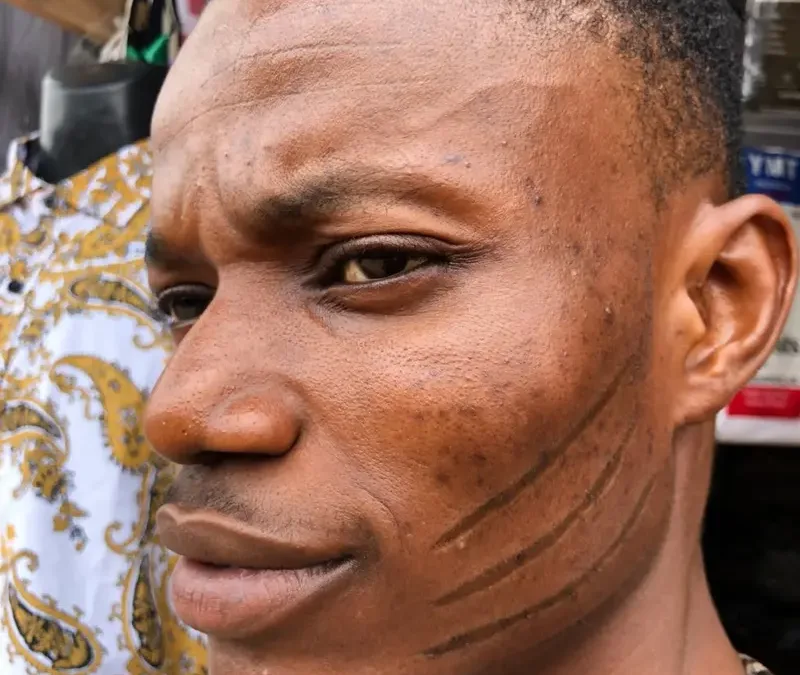
Have you ever seen someone with distinctive lines on their cheeks or forehead and wondered what they represent? In northern Nigeria, these markings tell stories of family heritage, ancestral roots and cultural identity.
Known in Hausa as tsagar gado, meaning inherited or ancestral marks, Hausa facial markings have existed for generations. They helped identify families, communities, traditional kingdoms and, in some cases, social positions.
Although the practice is declining, its history remains an important part of understanding northern Nigeria’s cultural diversity.
What Are Hausa Tribal Marks?
Hausa tribal marks are permanent scars traditionally created through deliberate cuts on the skin. Their designs vary across communities. Some feature short vertical lines on the cheeks, while others extend from the temples towards the mouth.
Communities in Katsina, Daura, Kano, Sokoto, Zamfara, Kebbi and Jigawa developed distinctive patterns.
A 2024 study by Bashir Aliyu Sallau, Sanusi Dauda and Sumayya Yakubu documents these markings and their cultural associations across northern Nigeria and Niger.
Why Did Hausa People Wear Tribal Marks?
The markings served several purposes:
- Family identity: They helped people recognise members of particular families and ancestral groups.
- Community identity: Different patterns identified people from traditional kingdoms and settlements.
- Social status: Some markings distinguished royal families and aristocrats from commoners.
- Beauty: Certain facial and body markings were considered decorative and attractive.
Some communities also maintained their markings after migrating and adopting aspects of Hausa language and culture.
Different Types of Hausa Tribal Marks
The 2024 study documents several traditional patterns associated with different communities.
- Katsinanci: Associated with the Katsinawa of Katsina. Its traditional arrangement features seven marks on one side of the face and six on the other. Aristocrats had seven on the right and six on the left, while commoners had the reverse arrangement. A variation is known as zube.
- Dauranci: Associated with Daura in Katsina State. It features two prominent lines extending from the temples towards the mouth, alongside shorter temple markings. Daura is also connected to the Bayajidda legend.
- Gobirci: Associated with the Gobirawa of areas in Sokoto State and Niger Republic. Some traditional patterns have six marks on the right and seven on the left.
- Zamfaranci: Associated with the Zamfarawa. Older patterns included ten marks on the left and nine on the right, although simpler versions exist.
- Lezumanci: Associated with the Lezumawa, mainly found in Katsina and Zamfara. Its pattern combines vertical and diagonal lines.
- Kabanci: Associated with the Kabawa of the Kabi Kingdom in Kebbi State. It traditionally features ten marks on the right and eleven on the left.
- Lekayawa: Reserved for the royal family descended from Kotal Kanta, founder of the Kabi Kingdom. It includes facial and forehead markings.
- Ƙwannanci: Associated with the Ƙwannawa of Ƙwanni. It features approximately 12 horizontal marks on the right and 11 on the left.
- Yargwaram: Associated with Gwaram in Jigawa State. It consists of three incisions beneath each eye.
- Wangarawa: Found around Rano and Gaya in Kano State and Dutse in Jigawa State. It features five long vertical lines on each cheek.
- Warjanci: Associated with the Warjawa of Masanya in Birnin Kudu, Jigawa State. It features two groups of five short lines on each side.
Facial Markings Among the Kanuri and Fulani
Hausaland also attracted other communities through migration, trade and settlement. Some adopted Hausa language and customs while retaining their ancestral markings.
The Kanuri, also called Barebari in some historical Hausa accounts, migrated from the Borno Empire into areas including Katsina. Their traditional markings sometimes featured three layers of incisions, with 10 to 15 lines in each layer.
The Fulani also maintained distinct traditions. The Dallazawa lineage of Katsina had markings called Kalangu, consisting of two or three straight lines on each cheek. Other documented groups include the Rumawa, Yanɗakawa, Shemawa, Mallawa and Ƙyarawa.
How Were the Marks Made?
Traditional practitioners called wanzamai performed the scarification. They were barbers whose work also included traditional medical procedures and body decoration.
The practitioners used instruments such as a double-edged knife called askar tsaga and razor blades. They learned through apprenticeships that could last one to two years.
Children commonly received markings during infancy, sometimes within their first week or before turning two. The timing depended on family traditions.
These descriptions document historical practices, not recommended procedures today.
Why Are Hausa Tribal Marks Disappearing?
Modernisation, education, urbanisation and changing beauty standards have influenced attitudes towards facial markings.
Religious and social changes have also contributed to the decline. Additionally, concerns about infection, excessive scarring and keloid formation have discouraged some families from continuing the practice.
As fewer people request the markings, traditional knowledge and the number of experienced practitioners are also declining.
Preserving the History of Hausa Tribal Marks
Hausa facial markings provide valuable insight into northern Nigeria’s history. They tell stories of ancestral kingdoms, migration, family relationships and cultural identity.
The research by Sallau, Dauda and Yakubu helps preserve details of patterns that are becoming less common.
Museums, cultural institutions and historical archives can also document photographs and oral accounts for future generations.
Although the practice is gradually disappearing, its cultural significance remains. These markings represent more than facial scars; they offer a glimpse into the identities and histories passed down through generations.












Join the conversation