

Mould is a common household problem that can affect homes in different parts of Nigeria. You may notice dark patches on bathroom walls, damp corners, ceilings, wardrobes or behind furniture. Although it may appear harmless at first, mould can spread quickly when the conditions are right. It can also affect indoor air quality and create health concerns, particularly for people with allergies or respiratory problems. During Nigeria’s rainy season, high humidity, water leaks and poor ventilation can make the problem worse. Understanding what causes mould and how to control it can help you maintain a cleaner and healthier home.
Mould is a type of fungus that grows on organic materials and spreads through tiny spores released into the air. These spores are naturally present in the environment and can settle on different surfaces inside your home. However, they need moisture, food, oxygen and suitable temperatures to grow. Household dust, dirt, skin cells and other organic materials can provide the food mould needs. This means even a seemingly clean surface can support mould growth when it remains damp. Mould can appear in different colours, including black, green and brown. However, its colour alone cannot tell you which species it is or how harmful it may be. Identifying a particular type requires proper laboratory testing. Fortunately, the basic ways to prevent household mould are similar, regardless of its appearance.
1. Keep Your Home and Surfaces Clean
Regular cleaning is one of the simplest ways to reduce mould growth. Dust, dirt, skin cells and other organic materials can collect on walls, floors, windows, ceilings and furniture. These materials can provide food for mould when moisture is present. Clean frequently used surfaces, including kitchen countertops, bathroom floors, sinks and window sills. Do not limit your cleaning routine to visible areas. Pay attention to corners, behind furniture, wardrobes and spaces that rarely receive attention.
You should also wipe down walls, ceilings and windows periodically, especially in areas that experience dampness. A mild solution of ordinary dishwashing detergent and water can help remove dirt from suitable surfaces. Clean bathroom walls and other moisture-prone areas regularly instead of waiting until mould becomes visible. You may also consider suitable commercial products designed to protect surfaces against mould. However, choose products according to their instructions and check that they are safe for household use.
2. Monitor and Control Indoor Humidity
Humidity refers to the amount of moisture in the air. When indoor humidity remains high, it creates favourable conditions for mould to grow. This can happen in Nigerian homes, particularly during the rainy season or in rooms with limited ventilation. A simple device called a hygrometer can help you measure indoor humidity. One of the recommended ways to control mould is to keep relative humidity below 60 per cent.
You can reduce excess moisture by opening windows and doors when outdoor conditions are dry enough. This allows fresh air to circulate and helps damp rooms dry out. However, avoid opening windows during heavy rainfall or when humid outdoor air could make indoor moisture worse. A dehumidifier may also help in rooms that remain damp, although larger spaces may require more than one unit. If your air conditioner has a dry mode, you can use it to reduce moisture in the air. Monitor different rooms because humidity levels may not be the same throughout your home.
3. Deal With Condensation on Windows and Walls
Condensation occurs when moisture in warm air settles on cooler surfaces. You may notice water droplets forming on windows, walls and other surfaces, particularly in rooms with poor airflow. Although condensation is commonly associated with colder climates, it can also occur in Nigerian homes where temperature differences and indoor moisture create suitable conditions.
Bedrooms, bathrooms and poorly ventilated spaces deserve particular attention. People release moisture into the air through breathing, especially when several people sleep in one room. To reduce condensation, wipe wet windows and walls with a clean, dry cloth whenever you notice moisture. Keep bedroom doors open when practical to improve airflow between rooms. You should also ensure that cold or damp areas receive adequate ventilation. Where possible, maintain comfortable indoor temperatures and avoid allowing rooms to remain damp for long periods. Regularly checking window sills and wall corners can help you notice early signs of mould.
4. Avoid Adding Too Much Moisture to Indoor Air
Some everyday household activities release large amounts of moisture into the air. Cooking, bathing, washing clothes and drying wet laundry indoors can increase humidity. Without proper ventilation, this moisture can settle on walls, ceilings and other surfaces. When cooking, use a kitchen extractor or range hood if your home has one. You can also open suitable windows to allow steam to escape.
Bathrooms need similar attention because showers and hot water create moisture. Use an exhaust fan during bathing and leave it running afterwards to remove excess humidity. A period of about 10 to 30 minutes after showering is recommended, depending on the ventilation needs of the room. If you use a clothes dryer, choose one that collects moisture rather than releasing it into the room. Condenser and heat pump dryers are examples of options that collect moisture. Also, avoid using unflued gas heaters indoors because they release moisture into the air.
5. Fix Water Leaks and Clean Spills Immediately
Water leaks are among the major conditions that encourage household mould. A leaking roof, damaged pipe, faulty bathroom fitting or overflowing sink can leave surfaces wet for extended periods. Even small spills can become a problem when they are ignored. Mould can begin developing on wet surfaces, carpets and fabrics within 24 to 48 hours under favourable conditions.
Check your roof, plumbing, bathroom fittings and kitchen sinks regularly for leaks. Repair damaged pipes and roof coverings as soon as possible. If water spills on your floor, furniture or carpet, clean it and dry the affected area immediately. Do not leave wet clothes, towels or rugs in enclosed spaces for long periods. If a wall or ceiling remains damp despite cleaning, investigate the source of the moisture. Removing visible mould without fixing the underlying leak will only provide a temporary solution.
How to Clean Mould That Has Already Appeared
Small, newly developed patches of mould may be manageable at home, but cleaning them requires care. Disturbing mould can release spores into the air, which people may inhale. Individuals with weakened immune systems, people over 60 who are unwell, young children and pregnant women should avoid cleaning mould themselves. People with respiratory conditions should also seek professional assistance. If mould covers a large area or keeps returning, contact a qualified mould-removal or water-damage professional.
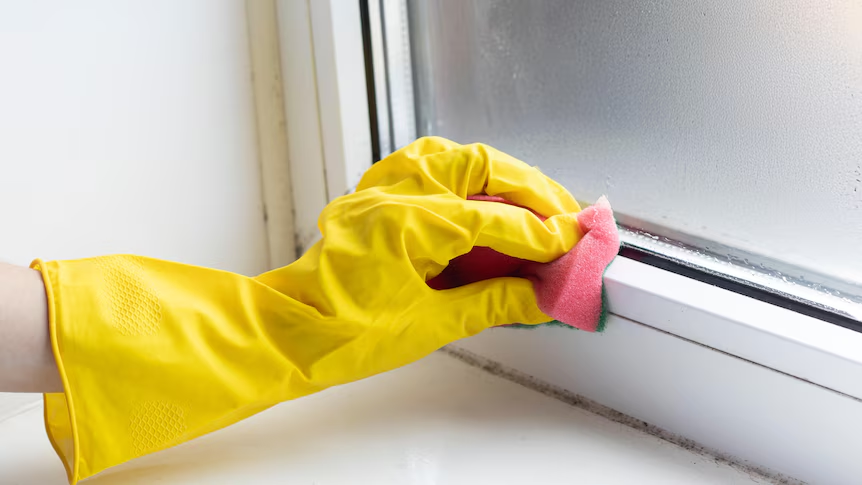
If you are healthy and dealing with a small affected area, wear protective equipment before cleaning. This should include gloves, protective eyewear and a P2 or N95 face mask. One suggested cleaning solution is a mixture of 80 per cent vinegar and 20 per cent water. Alternatively, you can use ordinary dishwashing detergent mixed with water. Apply the appropriate solution and physically wipe away the mould using a suitable cloth. The aim is to remove the mould, not simply kill it on the surface. Dead mould can still contain substances that may cause health problems. Follow product instructions and never mix different cleaning chemicals.
Does Clove Oil Really Remove Mould?
Clove oil is sometimes recommended as a household mould cleaner. A commonly suggested mixture contains about a quarter teaspoon of clove oil in one litre of water. However, it may not be the best option for cleaning household surfaces. Clove oil contains eugenol, a compound with antimicrobial properties that can affect fungal growth and spore development. However, evidence supporting its effectiveness as a mould-cleaning solution in buildings remains limited.
Another concern is the oily residue it can leave behind. This residue may collect airborne dust and skin cells, providing additional material that supports mould growth when moisture returns. Although clove oil may have some antimicrobial benefits, it should not replace proper cleaning or moisture control. Its protective effect can also reduce as the oil evaporates. Therefore, relying on it alone may not solve a mould problem.
Keeping mould out of your home requires regular cleaning, proper ventilation and quick attention to moisture problems. Check damp areas, repair leaks and avoid allowing wet surfaces to remain unattended. If mould continues spreading or returns after cleaning, investigate the underlying cause instead of repeatedly wiping the affected area. A clean, dry and well-ventilated home is one of the best ways to reduce mould growth and maintain a healthier living environment for your household.













Join the conversation