
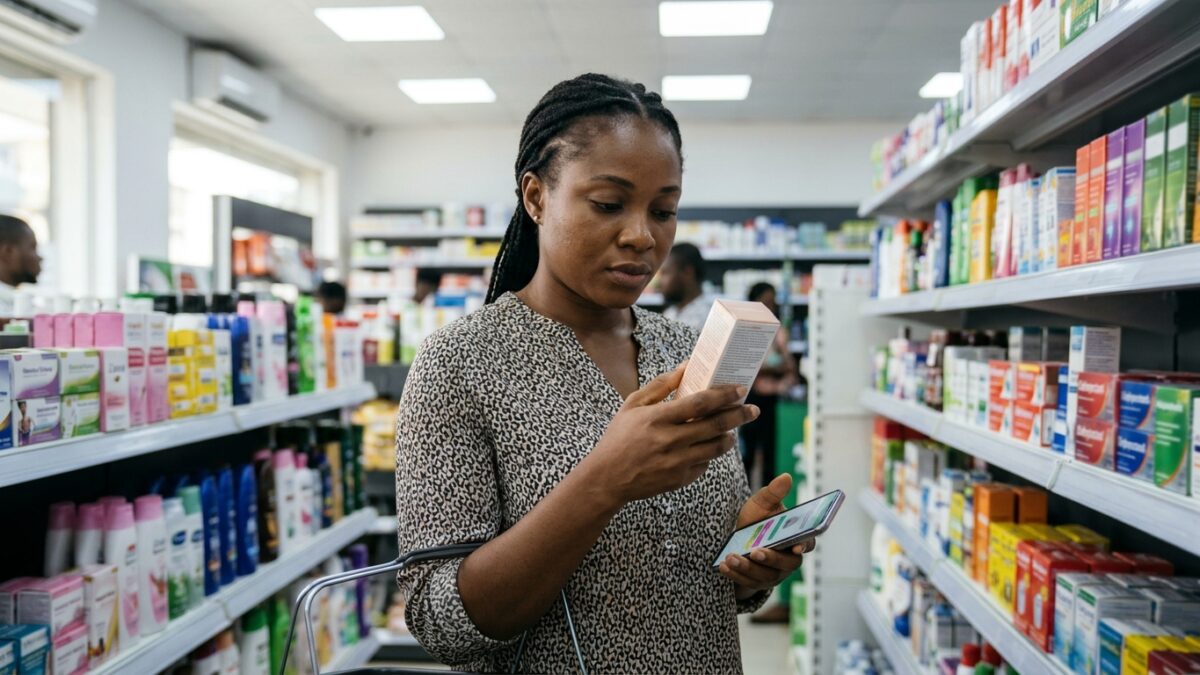
Buying a product that looks genuine does not always mean it is safe to use. From skincare products and medicines to packaged foods, counterfeit and substandard goods remain a concern for Nigerian consumers. Some fake products even carry NAFDAC registration numbers copied from legitimate brands. This makes it important to check what you buy, especially when a product causes an unexpected reaction or does not work as expected.
For instance, you may purchase a skincare cream that irritates your face, discover that a medicine is not producing the expected results, or notice unusual details on a food product’s packaging. In such situations, asking the seller for a refund may not be enough.
You can also report your concerns to the National Agency for Food and Drug Administration and Control (NAFDAC). The agency provides platforms that allow consumers to check product registration details and report suspected fake, substandard or unregistered products.
How to Check if a Product Is Genuine
1. Check the NAFDAC Registration Number and Product Label
Before buying a regulated product, check its packaging for important information. This includes the NAFDAC registration number, manufacturer’s name and address, batch or lot number, manufacturing date and expiry date. The label should also contain other information required for that type of product.
Do not overlook the condition of the packaging. Look for broken seals, spelling mistakes, altered expiry dates, poor-quality printing or differences in the product label. A product without the required information should also raise concerns. However, seeing a NAFDAC number on the packaging does not automatically prove that the product is genuine. Counterfeiters sometimes copy registration numbers from approved products and print them on unauthorised goods.
2. Use NAFDAC’s NAPAMS Portal and Greenbook
NAFDAC provides online platforms that consumers can use to check product registration information. One of these is the Automated Product Administration and Monitoring System (NAPAMS). You can visit the platform and use its product registration search to check the number printed on a product’s packaging.
Compare the search results with the product’s name, manufacturer and other available registration details. If the number produces no matching result, appears invalid or belongs to a different product, you should report the discrepancy to NAFDAC for further investigation. For medicines and other medical products covered by the database, consumers can also use the NAFDAC Greenbook to find information about registered medical products.
However, finding a matching registration number online does not guarantee that the particular product in your hands is authentic. Someone may have copied the number from a genuine product. Therefore, compare the registration information with the packaging, manufacturer’s details and place of purchase before deciding whether the product is safe.
3. Pay Attention to the Product and Where You Buy It
Where you purchase a product can also affect your chances of buying a counterfeit item. Buy medicines from licensed pharmacies and choose reputable sellers for food, cosmetics and other regulated products. Be cautious when a product is significantly cheaper than its usual market price, particularly when the seller cannot explain its source.
You can also compare suspicious packaging with information provided on the manufacturer’s official website or through its customer service channels. If the manufacturer confirms that the packaging or batch details are inconsistent, keep that information as evidence. Remember that an unexpected reaction or poor product performance does not automatically prove counterfeiting. Incorrect use, poor storage and other factors may also affect a product. However, any serious concern deserves attention.
How to Report Fake or Substandard Products to NAFDAC
4. Submit a Complaint Through the Greenbook Reporting Portal
If you suspect that a medicine or other medical product is falsified, substandard or unregistered, you can use the NAFDAC Greenbook reporting portal to submit a complaint. The reporting form requests information such as your contact details, product type, suspected problem and place of purchase.
Explain what made you suspicious and provide as much information as possible. Include the product’s name, NAFDAC registration number, batch number and expiry date where available. You can also attach photographs of the packaging, receipts, invoices and other supporting documents. These details may help NAFDAC understand the complaint and investigate the product.
5. Contact NAFDAC Through Its Official Channels
Another option is to contact NAFDAC through its complaints channels. You can report suspected fake or substandard products using the following contact details:
- Complaints hotline: 0800-1-623322
- Email: [email protected]
- Official website: nafdac.gov.ng
When submitting your complaint, describe the product and explain what appears suspicious. State where you purchased it and whether anyone experienced an unexpected reaction after using it. Attach photographs and proof of purchase if available. Providing clear information can make it easier for the agency to understand the issue.
If you experience an unexpected or adverse reaction to a medicine, vaccine or other medical product, you can also report it through the MedSafety app. The app is available for Android and iOS devices. NAFDAC also provides pharmacovigilance reporting resources for consumers who want to report suspected adverse reactions.
6. Send an SMS or Visit a NAFDAC Office
Consumers can also report product-quality concerns and suspected adverse drug reactions through NAFDAC’s Pharmacovigilance Rapid Alert System for Consumer Reporting (PRASCOR). The service allows you to send an SMS to 20543 to report your concerns. According to NAFDAC, the service is free on MTN, Airtel, Glo and 9mobile networks.
Alternatively, you can visit a NAFDAC office to submit your complaint in person. Take the product or its packaging, purchase receipt and any other evidence you have. A regulatory officer can document your complaint, and the agency may contact you if it needs additional information.
What to Do After Discovering a Suspicious Product
Once you suspect that a product is fake or unsafe, avoid using it while seeking advice from a qualified healthcare professional where necessary. Keep the product and its packaging intact if possible. Do not throw away the receipt, batch details or other evidence that could support an investigation. If the product has caused a serious reaction, seek medical attention immediately rather than waiting for a response from NAFDAC.
Ultimately, protecting yourself from counterfeit and substandard products requires more than checking a registration number. Pay attention to product labels, buy from reliable sellers and use NAFDAC’s available platforms when you have concerns. Reporting suspicious products can also help the agency investigate potential risks and protect other consumers. Your complaint may therefore help prevent someone else from buying or using a potentially harmful product.













Join the conversation