

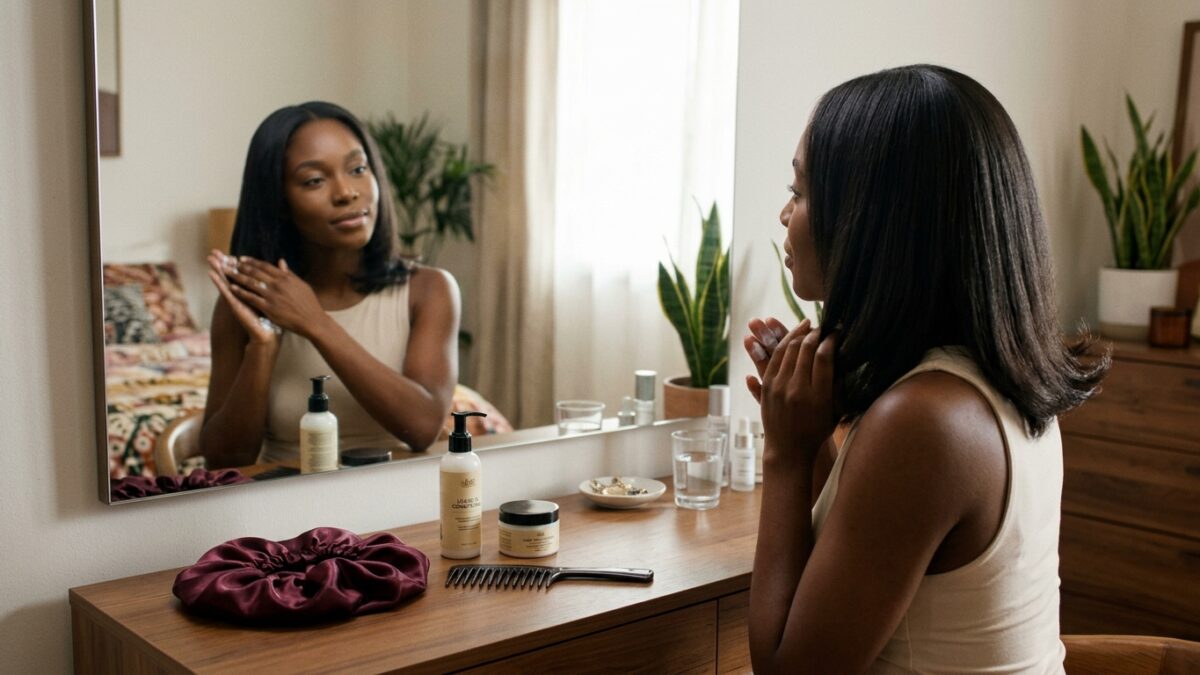
Getting a hair relaxer can make your hair easier to manage, especially when you prefer straight hairstyles. However, achieving a smooth finish is only part of the process. How you care for your hair afterwards matters just as much.
Relaxed hair has undergone a chemical process that changes its natural structure. This can make it more vulnerable to dryness, breakage and damage when you do not handle it properly.
In Nigeria, where many women regularly visit salons for retouching, washing, styling and other hair treatments, proper relaxer aftercare is important. Your hair may look healthy immediately after relaxing, but poor maintenance can gradually weaken it.
From washing too frequently to applying excessive heat, some everyday hair habits can affect the condition of relaxed hair.
Here are eight common relaxer aftercare mistakes and what you should do instead.
1. Relaxing Your Hair Again Too Soon
One common mistake is relaxing the hair too frequently because you want to maintain a straight and neat appearance.
When new growth begins to appear, you may feel tempted to apply another relaxer immediately. However, relaxing too often can weaken the hair and increase the risk of breakage.
Applying relaxer to previously treated hair can also cause overlapping. This happens when the chemical is applied to sections that have already been relaxed.
What to do instead:
- Allow enough time between relaxer treatments. Many hair professionals recommend waiting approximately eight to twelve weeks before retouching, although the right interval depends on your hair growth and condition.
- When retouching, the relaxer should only be applied to new growth. Avoid applying it repeatedly to already relaxed sections.
2. Ignoring Moisture and Conditioning
Relaxed hair can become dry and brittle, especially when it does not receive proper conditioning.
Some people focus mainly on making their hair look shiny without paying attention to its moisture needs. Unfortunately, dry hair is more likely to break during combing, brushing and styling.
What to do instead:
- Make conditioning a regular part of your hair-care routine.
- Use a suitable moisturising conditioner after shampooing. You can also incorporate a leave-in conditioner to help your hair remain manageable between wash days.
- Pay attention to your hair’s response to different products. If a product leaves your hair feeling stiff, greasy or uncomfortable, consider adjusting your routine.
3. Using Too Much Heat When Styling
Hair dryers, straightening irons and curling tools can help you achieve different hairstyles. However, excessive heat can weaken relaxed hair and contribute to dryness and breakage.
Regularly using high-temperature styling tools can make your hair more fragile, especially when it is already chemically processed.
What to do instead:
- Reduce how often you use heat-styling equipment. Whenever possible, allow your hair to air-dry or use low-heat settings.
- If you need to use a straightener or curling iron, apply a suitable heat protectant before styling. Avoid repeatedly passing hot tools over the same section of hair.
- You can also explore low-heat hairstyles that do not require frequent straightening.
4. Combing or Brushing Your Hair Too Roughly
Relaxed hair can become fragile, particularly around the ends and areas that have experienced previous breakage.
Pulling a comb through tangled hair or brushing it aggressively can cause unnecessary tension and hair loss.
This often happens when people rush through their morning routines or attempt to remove knots without first making the hair manageable.
What to do instead:
- Handle your hair gently when combing or brushing.
- Use a wide-tooth comb and work through tangles gradually, starting from the ends and moving towards the roots.
- Avoid pulling tightly at the scalp or forcing a comb through stubborn knots.
- If your hair is tangled, use a suitable conditioner or detangling product to make the process easier.
5. Wearing Tight Hairstyles Frequently
Ponytails, tight buns, braids and other pulled-back hairstyles can create tension around the hairline.
When these styles are worn repeatedly, they may contribute to breakage and traction alopecia, a form of hair loss caused by continuous pulling on the hair.
Relaxed hair may be particularly vulnerable when it is already weak from chemical processing.
What to do instead:
- Choose comfortable hairstyles that do not pull tightly at your roots.
- Avoid using tight rubber bands, heavy extensions or accessories that place unnecessary pressure on your hairline.
- Give your hair regular breaks from tightly secured styles. If you notice thinning around your edges, reduce tension immediately and seek professional advice if it continues.
6. Skipping Regular Trimming
Split ends are another issue that can affect relaxed hair.
When the ends become damaged, they may continue splitting along the hair shaft if the problem is not addressed. This can make the hair appear thinner and less healthy.
Some people avoid trimming because they want to retain every inch of their hair. However, leaving severely damaged ends can make hair maintenance more difficult.
What to do instead:
- Inspect your hair regularly and trim damaged ends when necessary.
- You do not need to remove large amounts of hair every time you visit the salon. The goal is to remove damaged sections while maintaining healthy length.
- A professional stylist can help you determine how much trimming your hair needs.
7. Sleeping Without Protecting Your Hair
Your hair can experience friction while you sleep. Regular contact with rough pillowcases can contribute to tangling, dryness and breakage.
This is particularly important for relaxed hair because it may already be vulnerable to damage.
What to do instead:
- Protect your hair before going to bed.
- You can use a satin or silk bonnet to cover your hair while sleeping. A satin or silk pillowcase is another option.
- These materials create less friction than many ordinary cotton fabrics. They can help reduce tangling and make your morning hair routine easier.
- Also, avoid tying your hair too tightly before sleeping.
8. Using Too Many Hair Products Without Understanding Your Hair’s Needs
It is easy to become interested in every new shampoo, conditioner, oil, treatment or hair-growth product advertised online.
However, using too many products without understanding their purpose can make your routine confusing. Some products may also cause irritation or leave unwanted buildup on the scalp and hair.
Applying several oils does not automatically make relaxed hair healthier.
What to do instead:
- Build a simple hair-care routine around your hair’s actual needs.
- Use a gentle shampoo, a suitable conditioner and a leave-in product where necessary. A strengthening treatment may also be useful when your hair needs additional support.
- Read product instructions before use and avoid applying products directly to an irritated or damaged scalp.
- If you experience persistent scalp irritation, unusual hair loss or severe breakage, consult a qualified dermatologist or healthcare professional.
Give Your Relaxed Hair the Care It Needs
Relaxing your hair does not mean you have to sacrifice its health. However, chemically processed hair requires consistent attention and gentle handling.
Avoid frequent relaxer applications, reduce excessive heat, moisturise and condition your hair properly, and protect it when sleeping. Pay attention to changes in your hair and scalp instead of following every hair-care trend you see online.
Most importantly, remember that healthy hair maintenance is not about using the most expensive products. It is about understanding your hair, choosing suitable treatments and maintaining habits that reduce unnecessary damage.
With the right aftercare routine, you can keep your relaxed hair manageable, attractive and in better condition.










Join the conversation