

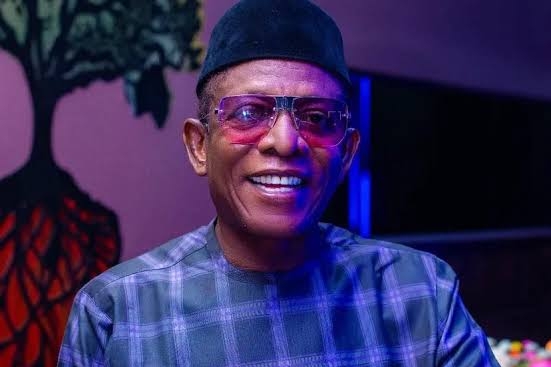
Nkem Owoh says Yoruba filmmakers pioneered home video in Nigeria but didn’t start Nollywood, and he’s explaining what he really meant. Here’s the gist.
Osuofia has stepped into one of Nollywood’s oldest arguments, and he wants his words understood properly this time.
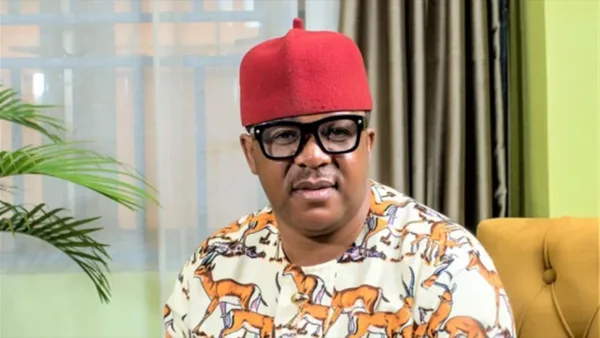
Veteran actor Nkem Owoh appeared on Curiosity Made Me Ask, a YouTube show hosted by comedian and content creator Adebayo Abidemi, better known as Bae U. The episode came out on Saturday, November 7, 2026. Asked about his alleged claim that the Yoruba started Nollywood and not the Igbo, he didn’t accept that version of his story. He called it a wrong accusation.
His argument is mostly about timing. According to him, the name Nollywood didn’t even exist when filmmakers first began making movies, so no single group can claim to have started it. “The Yoruba did not start Nollywood. They started Home video,” he said.
He still gave Yoruba filmmakers their flowers for making home video popular across the country. He mentioned Hubert Ogunde and Adebayo as names whose works he enjoyed watching. He also pushed back on the suggestion that Ogunde was Igbo, insisting he was Yoruba and had become prominent before Igbo filmmakers were widely recognised in the industry. Owoh explained that what he had actually pointed out was that Yoruba filmmakers were active in theatre and performance long before the Igbo-led video wave of the 1990s.
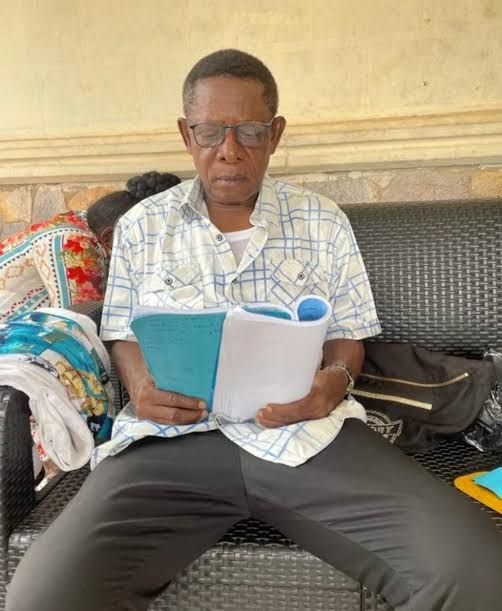
The timing of the clarification isn’t random. The Yoruba and Igbo contributions to Nollywood got fresh attention in August 2026, when Francis Duru argued that Igbo entrepreneurs built modern Nollywood through the home-video boom of the 1990s and early 2000s. In his view, Yoruba filmmakers had since become more dominant through stronger organisation and better promotion of their culture.
The history itself shows how tangled the two stories are. Kenneth Nnebue’s Living in Bondage (1992) is widely regarded as the first blockbuster Nigerian home video, and it helped kick off the boom. But Nnebue had already produced Yoruba-language video films before it, including Aje Ni Iya Mi in 1989.
So maybe the real question isn’t who owns the Nollywood title. It’s how many hands were already at work before anyone gave the industry its name.








Join the conversation