

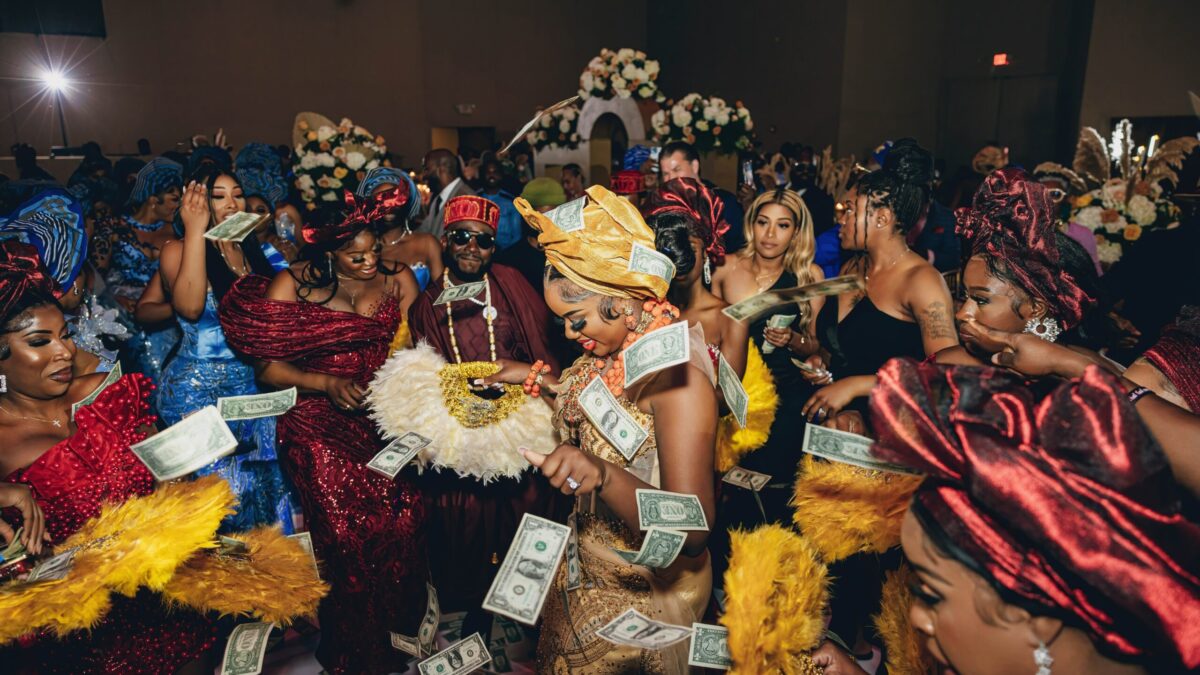
Spraying naira at weddings, birthdays and burials is an offence under Section 21 of the Central Bank of Nigeria Act 2007, and in July 2026 the Federal High Courts in Asaba and Benin City convicted ten people for doing exactly that at social events. One of the charges came from a wedding in Kwale, Delta State, where a guest was accused of spraying ₦50,000 in ₦200 notes on the last day of 2025.
With wedding invitations piling up and December parties around the corner, that’s worth knowing before you change a bundle of crisp notes for the dance floor. Spraying is so tied to how many of us celebrate that the law can feel strange at first, but it has been in place for almost twenty years, and the ten people convicted in July were everyday guests, not famous faces. If you’re already counting what aso-ebi season is costing you in weddings, this is one more thing to plan around.
What the CBN Act really says about spraying and dancing on money
Section 21(1) of the Act makes it an offence to tamper with any coin or note issued by the Central Bank, and subsection (3) goes further by stating that “spraying of, dancing or matching on the Naira or any note issued by the Bank during social occasions” counts as abuse of the currency. The punishment written into the law is imprisonment for not less than six months, a fine of not less than ₦50,000, or both. You can find the Act and the bank’s currency guidance on the Central Bank of Nigeria website.
For a long time, many Nigerians treated this as a rule that only existed on paper, which is partly why spraying never really stopped at owambes. CBN officials have repeated the warning over the years, and they’ve also spoken against hawking new notes at motor parks and event venues during festive periods, a trade that exists mainly because people want fresh notes to spray.

Ten convictions in one month show it isn’t only celebrities who get caught
The July cases involved ordinary people who sprayed money while dancing at social events. Eight of them were sentenced in Asaba to 12 months’ imprisonment each, with an option of a ₦100,000 fine, while the two convicted in Benin City got six months each, also with an option of ₦100,000. All ten pleaded guilty and signed written undertakings to be of good conduct, according to the Economic and Financial Crimes Commission, which prosecuted the cases.
Those weren’t the only cases this year. EFCC operatives in Enugu arrested a man over alleged naira abuse at his own birthday party, and the commission has also arrested public figures over the same offence. Videos from parties travel fast on social media, and a clip of you showering notes on the celebrant can easily end up as evidence, so the old idea that nobody is watching doesn’t hold anymore.
Stepping on the notes and squeezing them can also count against you
The law doesn’t stop at throwing money in the air. Dancing or marching on notes is named in the same subsection, so a floor covered in cash that guests are dancing over is exactly the scene the Act describes. CBN currency officials have also asked Nigerians to keep notes neat, without squeezing them or letting them soak in oil, since rough handling makes notes wear out far sooner than they should.
If you’re a DJ, an MC or an event planner, it helps to think about this before the programme starts. Telling guests early how the couple would like to receive gifts saves everyone the awkward moment of someone pulling out a bundle in the middle of the first dance.
You can still bless the couple, just in a smarter way
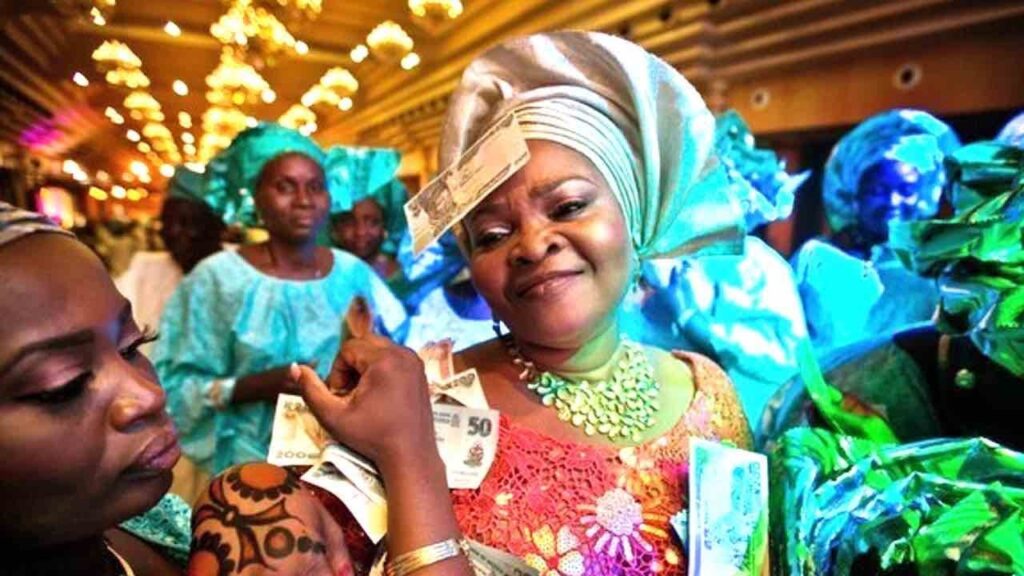
A CBN official once described the envelope as “the best and acceptable means of extending goodwill at events”, and it still works beautifully. Put your gift in an envelope, write your name on it so the couple knows who it came from, and drop it in the gift box or hand it to a family member collecting on their behalf. It also stops the money from disappearing into strangers’ pockets when notes land on the floor.
More couples now print their account details or a payment QR code on the programme or on a card at the reception, so guests can send money by transfer while the celebrants dance. Confirm the details with a family member you trust before sending, because one wrong digit can send your gift to a stranger, and if you’re the one receiving, remember that a transfer screenshot isn’t money until it shows in your balance. Every family does things a bit differently, as you’ll see in how wedding traditions differ across Yoruba, Igbo and Hausa cultures, but an envelope or a transfer fits into all of them.
So before your next owambe, swap the bundle of ₦200 notes for an envelope or your banking app, and nudge the friend who’s planning to “make it rain” to do the same. The celebrant still gets every kobo, the party loses none of its joy, and nobody has to explain a dance-floor video to an EFCC investigator. If you or someone close to you is ever invited over a case like this, speak to a lawyer before saying anything.






Join the conversation