

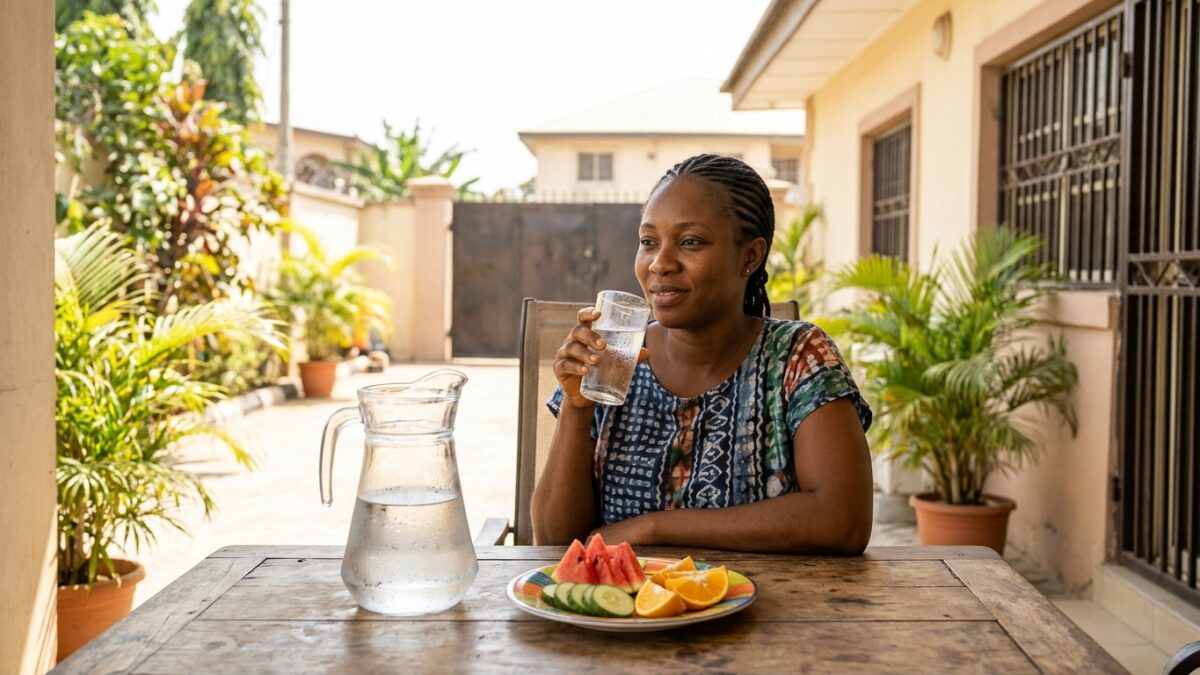
Staying hydrated is essential for maintaining energy, supporting digestion and regulating body temperature. In Nigeria, where hot weather can occur throughout the year, drinking enough fluids is particularly important. Heat, outdoor activities, long commutes and physically demanding jobs can increase sweating and fluid loss.
If you spend hours outdoors, exercise regularly or work under the sun, your hydration needs may be higher than usual. Even mild dehydration can contribute to headaches, tiredness, dizziness and reduced physical performance. Understanding how much water your body needs can help you stay comfortable and healthy, especially during particularly hot periods.
There is no single amount of water that works for everyone. Your needs depend on factors such as body size, age, activity level, health and the weather. You may have heard that everyone should drink eight glasses of water daily, but this is only a rough guideline. Some people need more, particularly when they sweat heavily or spend long hours in hot environments. Rather than forcing yourself to drink a fixed amount, pay attention to your body’s needs and drink regularly throughout the day.
Thirst is a useful signal, although people doing strenuous activities in extreme heat should not rely on thirst alone. Pale-yellow urine generally suggests adequate hydration, while consistently dark urine may indicate that you need more fluids. However, some medicines and health conditions can affect urine colour.
Drinking enough water is important, but replacing lost electrolytes may also matter when you sweat heavily. Sweat contains water and minerals called electrolytes, including sodium, potassium, chloride, calcium and magnesium. These minerals help regulate fluid balance, nerve signals and muscle contractions. For most people doing ordinary daily activities, drinking water and eating balanced meals provide what they need.
However, people who exercise intensely for extended periods, perform strenuous outdoor work or sweat excessively may benefit from replacing electrolytes as well. Oral rehydration solutions can be useful when fluid and electrolyte losses occur through diarrhoea or vomiting. They should be prepared according to the instructions and used for the appropriate purpose. Sports drinks and electrolyte supplements are not necessary for everyone, and sugary drinks should not replace water as your everyday hydration choice.
One important hydration mistake is waiting until you feel exhausted or extremely thirsty before drinking. Instead, make drinking water part of your daily routine. Start your morning with a glass of water, keep a refillable bottle nearby and take regular drinks throughout the day. If you commute, attend meetings, work on a construction site or run errands under the sun, carry water with you. You can also drink before outdoor activities and take breaks in shaded or cool areas when possible.
Avoid trying to compensate for an entire day of inadequate drinking by consuming large amounts of water at once. Spread your intake across the day, and increase it when heat and activity cause additional fluid loss. Do not force excessive amounts of water, as drinking too much can dangerously dilute sodium levels in the blood.
Your meals can also contribute to hydration. Water-rich fruits and vegetables provide fluids alongside essential nutrients. In Nigeria, affordable options include watermelon, cucumber, oranges, pawpaw, pineapple, tomatoes and garden eggs. You can enjoy watermelon as a snack, add cucumber and tomatoes to meals, or eat fresh fruit between meals. Soups and other meals prepared with water also contribute to your overall fluid intake. These foods complement drinking water rather than replacing it completely.
If you struggle to drink plain water regularly, try adding slices of lemon, lime, cucumber or pineapple for flavour. Fresh mint can also add a refreshing taste. These additions can make water more appealing without requiring extra sugar.
Another way to maintain hydration is to choose drinks carefully. Water should remain your main everyday option because it replenishes fluids without adding sugar. Coconut water contains some electrolytes, but its mineral content varies, and it is not a complete replacement for oral rehydration solution when treating significant dehydration.
Sweetened juices, soft drinks and energy drinks can add considerable sugar, so consume them in moderation. Alcohol can also affect hydration and is not a suitable way to replace fluids lost through sweating. If you enjoy flavoured drinks, homemade fruit-infused water can provide variety without making hydration unnecessarily expensive. You do not need imported electrolyte powders or specialised drinks









Join the conversation