

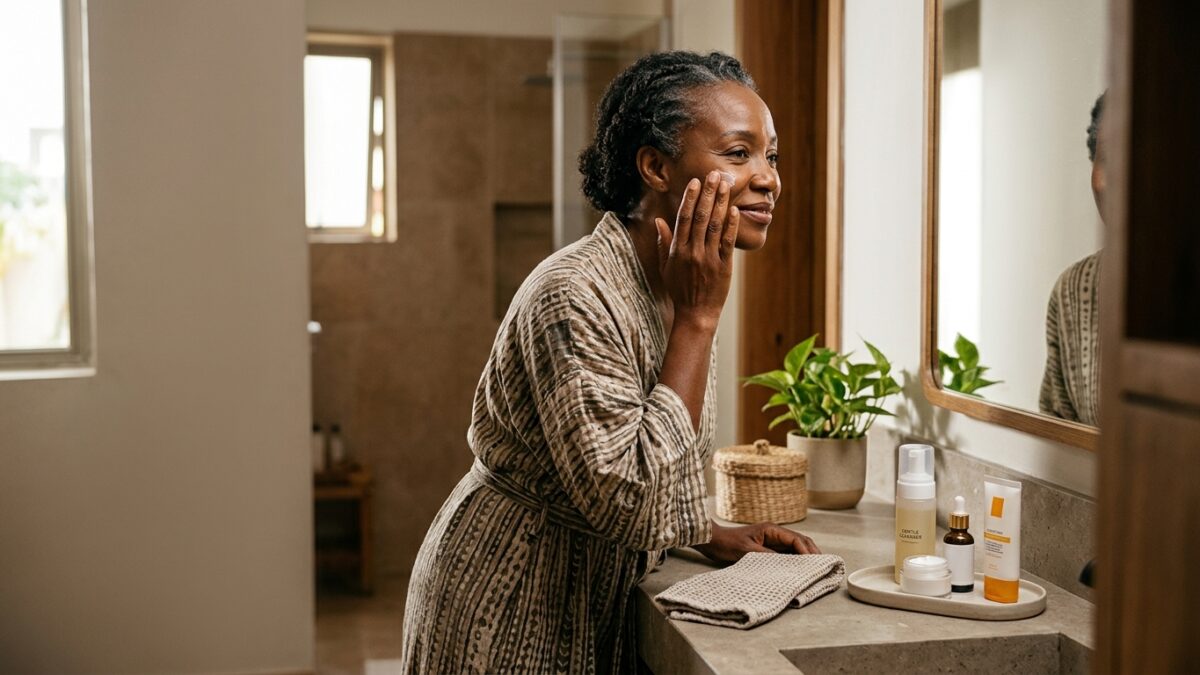
Hormonal changes during perimenopause and menopause can affect your skin in several ways. You may notice increased dryness, fine lines, uneven skin tone or reduced firmness. Your skin might also become more sensitive to products you have used comfortably for years. These changes are normal, but they can affect your confidence and comfort. Perimenopause is the transition leading to menopause, while menopause is confirmed after 12 consecutive months without a menstrual period.
During these stages, declining and fluctuating oestrogen levels can affect collagen production, skin hydration and elasticity. Collagen helps maintain skin structure, while elastin allows it to stretch and return to its original shape. When these proteins decrease, the skin may appear thinner and wrinkles may become more noticeable. Women in Nigeria may also experience additional skin challenges from strong sunlight, heat, humidity and environmental pollution. However, you do not need expensive skincare products to care for your skin. Understanding these changes and adopting a consistent routine can help you maintain a healthy complexion throughout this transition.
One of the most noticeable changes is increased dryness and dehydration. Oestrogen helps support the skin’s natural moisture balance and protective barrier. As hormone levels decline, your skin may struggle to retain moisture, leaving it rough, tight or flaky. You may also notice reduced firmness, especially around your cheeks, jawline and neck. Fine lines can become more visible, while dark spots and uneven pigmentation may develop or become more noticeable. Some women experience increased sensitivity, redness or occasional breakouts around the chin and jawline. The skin may also become thinner and more vulnerable to bruising or minor injuries. These changes do not happen at the same rate for everyone. Genetics, age, sun exposure, lifestyle and existing skin conditions can influence how your complexion changes. Rather than trying to reverse every sign of ageing, focus on maintaining healthy, comfortable skin. A good routine should protect your skin barrier, support hydration and reduce avoidable damage.
1. Establish a simple, consistent skincare routine. You do not need a shelf full of products to care for mature skin. In the morning, wash your face with a gentle cleanser that does not leave your skin feeling tight. Apply a moisturising serum if needed, followed by a suitable moisturiser and broad-spectrum sunscreen with SPF 30 or higher. In the evening, cleanse your face to remove sweat, dirt, sunscreen and makeup. Apply your moisturiser while your skin is slightly damp to help retain moisture. Introduce new products gradually, especially if your skin has become sensitive. Avoid harsh soaps, aggressive scrubbing and frequent use of strong exfoliating products. Nigeria’s hot weather can make heavy products uncomfortable, so choose a moisturiser that suits your skin type and local climate. If your skin is oily, a lightweight, non-comedogenic formula may feel more comfortable. If it is very dry, a richer cream may provide better support.
2. Consider adding vitamin C to your morning routine. Vitamin C is an antioxidant that helps protect the skin against oxidative damage caused by environmental factors, including ultraviolet radiation. Some formulations may also support collagen production and improve the appearance of uneven skin tone. Look for a well-formulated product containing a recognised form of vitamin C, such as L-ascorbic acid. Other derivatives are available, although their effectiveness depends on the formulation. Apply it after cleansing and before moisturising, following the product instructions. If you have sensitive skin, begin with a lower concentration and monitor your skin’s response. Vitamin C does not replace sunscreen, which remains essential for protecting against sun damage. If a product causes persistent burning, redness or irritation, discontinue use and seek professional advice.
3. Explore peptides and other ingredients that support mature skin. Peptides are ingredients used in some skincare products to support the appearance of firmer, smoother skin. Certain formulations may help improve the appearance of fine lines over time. However, results vary, and products containing peptides are not guaranteed to restore lost collagen. You may also encounter products marketed with growth factors or other skin-renewal ingredients. Their benefits depend on the specific ingredients, formulation and available evidence. Before spending heavily on specialised serums, prioritise a gentle cleanser, moisturiser and sunscreen. These basic products address common concerns such as dryness and sun damage. If you want to introduce additional treatments, a dermatologist can help you decide which ingredients suit your skin and budget.
4. Use hydrating ingredients such as hyaluronic acid. Hyaluronic acid attracts and holds water, helping the skin appear smoother and temporarily plumper. It can be useful when hormonal changes leave your complexion feeling dry or dehydrated. Apply a suitable serum according to its instructions, then follow with a moisturiser to help reduce moisture loss. You can also support your skin by drinking enough water, particularly during hot weather. However, drinking excessive amounts of water will not independently reverse wrinkles or replace moisturising products. Choose fragrance-free formulations if your skin is sensitive, and introduce new products one at a time. If your skin remains persistently dry despite regular moisturising, seek medical advice to identify possible contributing factors.
5. Make moisturiser and sunscreen non-negotiable. A suitable moisturiser helps strengthen the skin barrier, reduce water loss and improve comfort. Ingredients such as glycerin, ceramides and hyaluronic acid can help support hydration. Apply moisturiser consistently, including to your neck, if the product is suitable for that area. Sunscreen is equally important because ultraviolet exposure contributes to pigmentation, wrinkles and collagen breakdown. In Nigeria, strong sunlight makes daily sun protection particularly worthwhile, even when the weather appears cloudy. Choose broad-spectrum SPF 30 or higher and reapply according to the product instructions, especially after sweating or wiping your face. A hat, sunglasses and shade can provide additional protection. Sunscreen does not stop natural ageing, but it helps reduce preventable sun damage.
6. Ask a healthcare professional about topical hormonal treatments. Some prescription treatments containing oestrogen may improve certain skin changes associated with menopause. However, they are not suitable for everyone and should not be used without medical guidance. A dermatologist or qualified healthcare professional can assess your symptoms, medical history and individual risks before recommending treatment. Do not apply hormone creams intended for other purposes to your face without professional advice. If you experience severe dryness, persistent irritation, sudden skin changes or symptoms that interfere with daily life, arrange a medical assessment rather than relying entirely on cosmetic products.
7. Seek professional guidance and adjust your routine when necessary. A dermatologist can help identify whether your concerns relate to hormonal changes, sun damage, eczema, acne or another skin condition. They can also recommend suitable treatments and explain which ingredients may cause irritation. You do not necessarily need frequent facials or expensive procedures to maintain healthy skin. If you choose professional treatments, confirm the provider’s qualifications and discuss possible side effects, recovery time and costs beforehand. Meanwhile, protect your skin by getting adequate sleep, eating a balanced diet and avoiding smoking. Be patient with new products because improvements often take several weeks. The goal is to find a routine you can maintain comfortably.
Ultimately, perimenopause and menopause do not mean you must give up on healthy, radiant skin. Your skin may need different care as your hormones change, but simple habits can make a meaningful difference. Start with gentle cleansing, regular moisturising and daily sun protection. Add other products only when they address a specific concern and suit your skin. Most importantly, remember that ageing is a natural process, not a flaw you must correct. If changes become uncomfortable or difficult to manage, professional advice can help you make informed decisions. With realistic expectations and consistent care, you can support your skin’s health and feel more confident throughout this stage of life.













Join the conversation