

A wardrobe full of clothes, kitchen cabinets overflowing with containers and a living room crowded with unused items can make your home feel smaller than it really is.
In many Nigerian homes, clutter accumulates gradually. We keep old electronics because they might become useful again. We save takeaway containers, hold on to clothes we no longer wear and store broken appliances while waiting for repairs.
Family expectations can also make decluttering difficult. Throwing away an item someone gave you may feel disrespectful, while discarding something expensive can feel wasteful.
However, keeping everything does not always save money or space. Unused belongings can make cleaning harder, increase stress and prevent you from enjoying your home.
Decluttering means deciding what deserves space in your life and letting go of what no longer serves a purpose. You do not need to buy expensive organisers or transform your entire home in one weekend.
These five practical steps can help you create a cleaner, more organised living space.
1. Prepare Before You Start
Decluttering becomes easier when you have a clear plan. Instead of randomly moving items between rooms, decide which area you want to organise and what you hope to achieve.
Start by choosing a suitable time. You might prefer a quiet Saturday morning or an hour after work. Open the windows when the weather and outdoor conditions permit, and ensure the room has enough light.
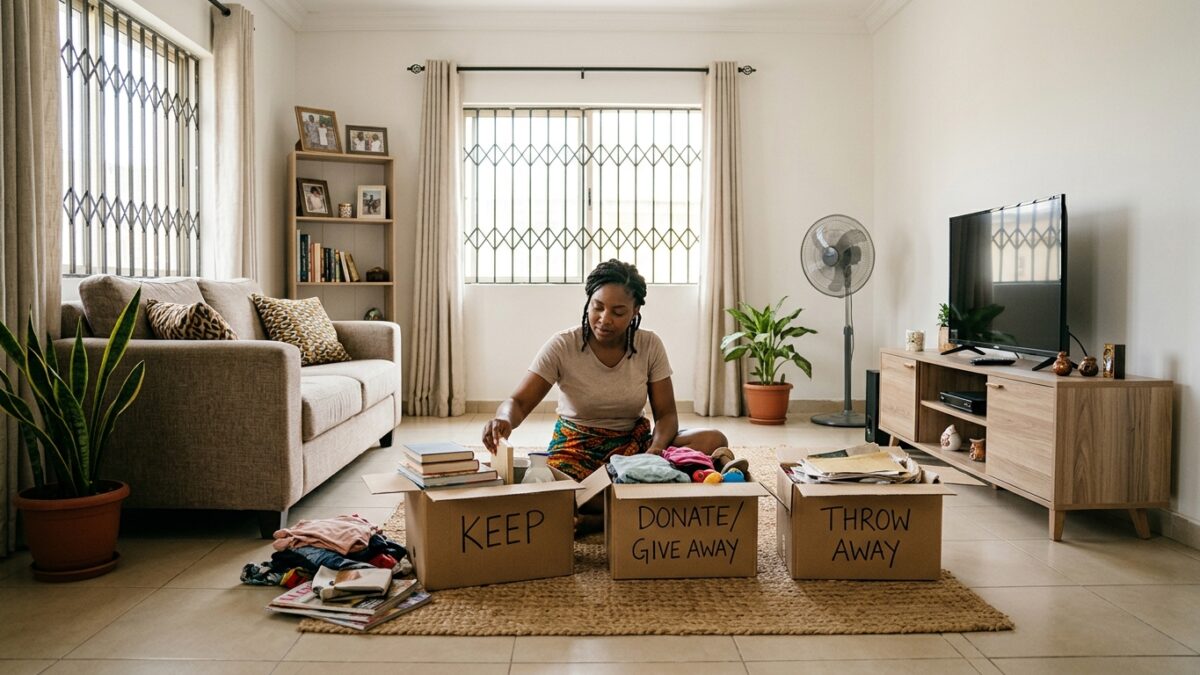
Gather materials before you begin. You can use cardboard cartons, reusable bags or containers you already own. Label them according to their purpose.
Create separate categories for items you want to keep, donate, repair, discard or relocate. This system helps you make decisions instead of creating new piles.
For example, if you are organising your wardrobe, keep clothes you regularly wear in one category. Put wearable items you no longer need aside for donation or resale. Separate damaged clothes that can reasonably be repaired.
You should also decide what you want the space to look like when you finish. Perhaps you want a kitchen counter with fewer items or a wardrobe where you can find your clothes quickly.
Having a clear goal makes it easier to stay motivated.
2. Start Small to Avoid Feeling Overwhelmed
One reason people abandon decluttering projects is that they attempt too much at once.
You might decide to reorganise your entire house on Saturday, only to discover that you have emptied several cupboards without finishing any of them.
Instead, begin with one manageable area.
You could organise a bedside table, one kitchen shelf, a handbag, your shoe rack or a single section of your wardrobe. Once you finish, move to the next area.
This approach gives you visible results and helps you build momentum.
For instance, you could spend 20 minutes removing expired products and unnecessary containers from your kitchen. Another day, you might organise your bathroom cabinet or clear your work desk.
If your home has a storage room filled with old furniture, cartons and unused appliances, divide it into sections. Complete one section before moving to another.
Remember that decluttering is an ongoing process. You do not have to finish everything in one day.
If you live with family members or roommates, involve them where appropriate. Agreeing on shared goals can make the process easier and prevent disagreements about belongings.
3. Be Honest About What You Really Need
Letting go of belongings can be difficult, especially when you paid a lot for them or received them as gifts.
You might keep an old blender because it was expensive, even though it no longer works. You may hold on to clothes that no longer fit or shoes that have remained untouched for years.
Instead of asking whether an item might become useful someday, consider whether you genuinely need it.
Ask yourself three questions: Do I use it? Does it serve a practical purpose? Would I choose to keep it if I were organising this space today?
If the answer is consistently no, consider letting it go.
Sentimental items require a different approach. You do not have to discard every object connected to a memory. Keep the belongings that genuinely matter and avoid storing everything simply because it reminds you of the past.
If you are uncertain about a non-essential item, place it in a labelled box and set a review date. If you do not need or miss it after a reasonable period, consider donating or selling it.
Be careful with items that contain personal information, sensitive documents or financial records. Dispose of these securely rather than placing them in ordinary donation bags.
The goal is not to own as little as possible. It is to keep belongings that add value to your life.
4. Give Every Unwanted Item a Final Destination
Decluttering is incomplete when unwanted items remain in bags around the house for months.
You may clear your bedroom only to move the clutter into the guest room. Eventually, the same belongings return to their original places.
To avoid this cycle, decide what will happen to each item before finishing your session.
Clothes, shoes, books and household items in good condition may be suitable for donation or resale. You could offer them to relatives, neighbours or community groups that genuinely need them.
Broken appliances and damaged furniture may require repair, specialised disposal or collection. Do not leave bulky items on streets or beside drainage channels.
Where recycling services are available, separate accepted materials such as certain plastic bottles, paper, cardboard and metal items. Check local collection requirements because not every material can be recycled everywhere.
For items you want to sell, take clear photographs and set a realistic price. However, avoid allowing unsold belongings to occupy your home indefinitely.
Set a deadline for completing the sale. If the items remain unsold, consider another suitable option.
Also, avoid buying new storage baskets immediately after decluttering. First, determine what you actually need to organise. You may discover that existing shelves and containers are sufficient.
5. Build Habits That Prevent Clutter From Returning
A clean home can become cluttered again when old habits remain unchanged.
You might organise your wardrobe today but continue buying clothes you rarely wear. You may clear your kitchen counter only to fill it with unnecessary appliances next month.
Preventing clutter requires more thoughtful decisions about what enters your home.
Before buying something, ask whether you need it and where you will keep it. Avoid shopping simply because an item is discounted.
When replacing an old item, consider whether the existing one can be repaired or reused. For example, a tailor may repair a favourite outfit, while a technician might restore a suitable household appliance.
Create a simple rule: whenever you bring home a new non-essential item, review whether something similar can be donated, sold or responsibly discarded.
Schedule short decluttering sessions weekly or monthly. Ten minutes spent returning items to their proper places can prevent a larger mess from developing.
You can also involve your household. Encourage everyone to return shared items after use and keep personal belongings within designated spaces.
If clutter starts returning, address it early rather than waiting until every surface is covered.
Enjoy Your Space Again
Decluttering is not about creating a perfect home for social media. It is about making your living space more comfortable, functional and easier to maintain.
Start with one small area, make honest decisions about your belongings and ensure unwanted items leave your home responsibly.
You do not need to throw away everything or spend money on expensive organisers. You simply need a practical system that works for your household.
Your home should make daily life easier, not leave you constantly searching for things or struggling to find space. Start small, stay consistent and create a space you genuinely enjoy living in.












Join the conversation