

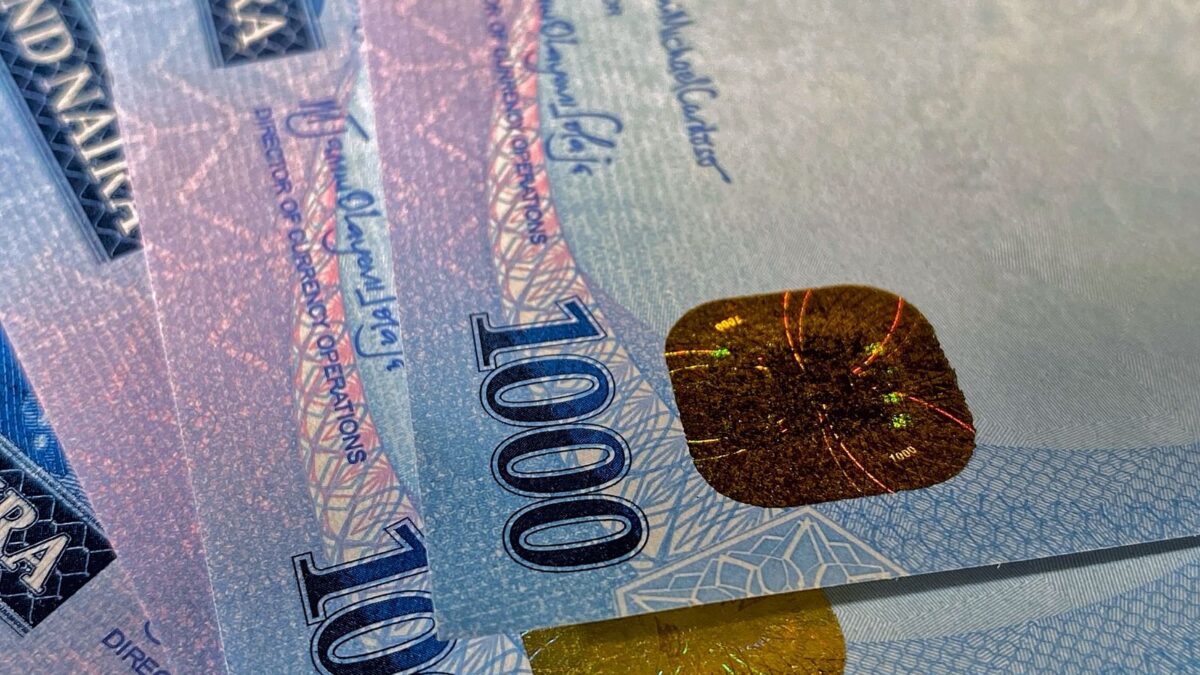
The Central Bank of Nigeria (CBN) lists the naira security features on its currency security features page, and most of them can be checked with nothing more than light, your fingers and a slight tilt of the note. The paper notes from ₦100 to ₦1,000 carry the marks the CBN describes in most detail, so a few seconds of checking before you collect your change or a cash payment is time well spent.
Lift the note to the light and that broken line should join up
According to the CBN, the security thread “ordinarily, looks broken but is not when held up against light”, and it carries the letters “CBN” in small print on both sides. Hold the note up towards a bulb or the sky, and the thread on a genuine note should show as one continuous line running through the paper.
The CBN also lists an electrotype watermark on the ₦1,000, ₦500, ₦200 and ₦100 notes, which covers all four of the paper denominations, so holding each one up to the light is worth getting used to.
Your thumb can pick up what a quick glance misses
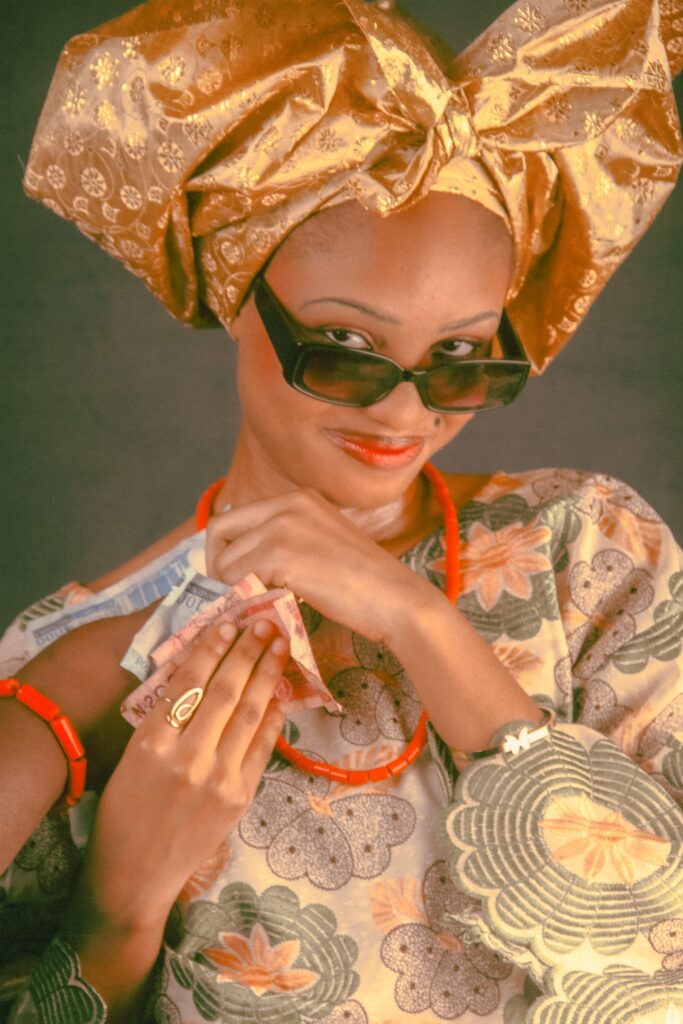
The CBN says raised print is one of the features that can be recognised by touch, and it explains that the portrait, the lettering and the denomination numerals on both sides of the note are embossed. Run your thumb over the portrait and the large numbers, and you should feel the raised texture the bank describes rather than a completely flat surface.
The ₦500 and ₦200 notes carry one extra mark worth tilting for
The CBN lists gold or silver patches on the ₦500 and ₦200 notes, with an embossed outline of Nigeria’s coat of arms. The bank also says some of the features on the notes have a shimmer, shine or motion effect, so tilting the note slightly under light is part of checking it properly.
The CBN’s security page says shimmer, shine and motion features, along with raised print and metallic threads, can’t be reproduced well by a scanner or photocopier, which makes them the parts of a note most worth your attention when you’re unsure.
A UV lamp shows one more layer the CBN printed into each note
The CBN also prints parts of the notes with special inks that it says illuminate in bright, altered colours under ultraviolet (UV) light. You won’t carry a UV lamp to the market, but if a shop or bank counter you use has one, those inks are another layer of protection the CBN has built into each note.
The ₦5 to ₦50 notes are polymer, so not every check applies
The ₦5, ₦10, ₦20 and ₦50 notes are polymer, and the CBN gives their size as 130mm by 72mm, while the paper notes from ₦100 to ₦1,000 measure 151mm by 78mm. The page names the watermark and the gold or silver patches only for the paper notes, so those particular checks belong to the ₦100, ₦200, ₦500 and ₦1,000.
The CBN’s page also shows images of the redesigned ₦200, ₦500 and ₦1,000 notes, so if you’re not sure what the newer versions look like, that’s the official place to compare a note in your hand with the real design.
Make the light, touch and tilt check a habit

Whether the cash is coming from your ajo contribution payout or you’re getting notes ready for an owambe where naira gets sprayed, checking each bundle takes far less time than sorting out a bad note later. Transfers need the same care, because a transfer screenshot isn’t money until it shows in your balance.
If a note doesn’t pass the light and touch checks, hand it back politely and ask for another one. Hold it up, run your thumb across the portrait, tilt it once, and you’ll have covered the main naira security features the CBN describes.





Join the conversation